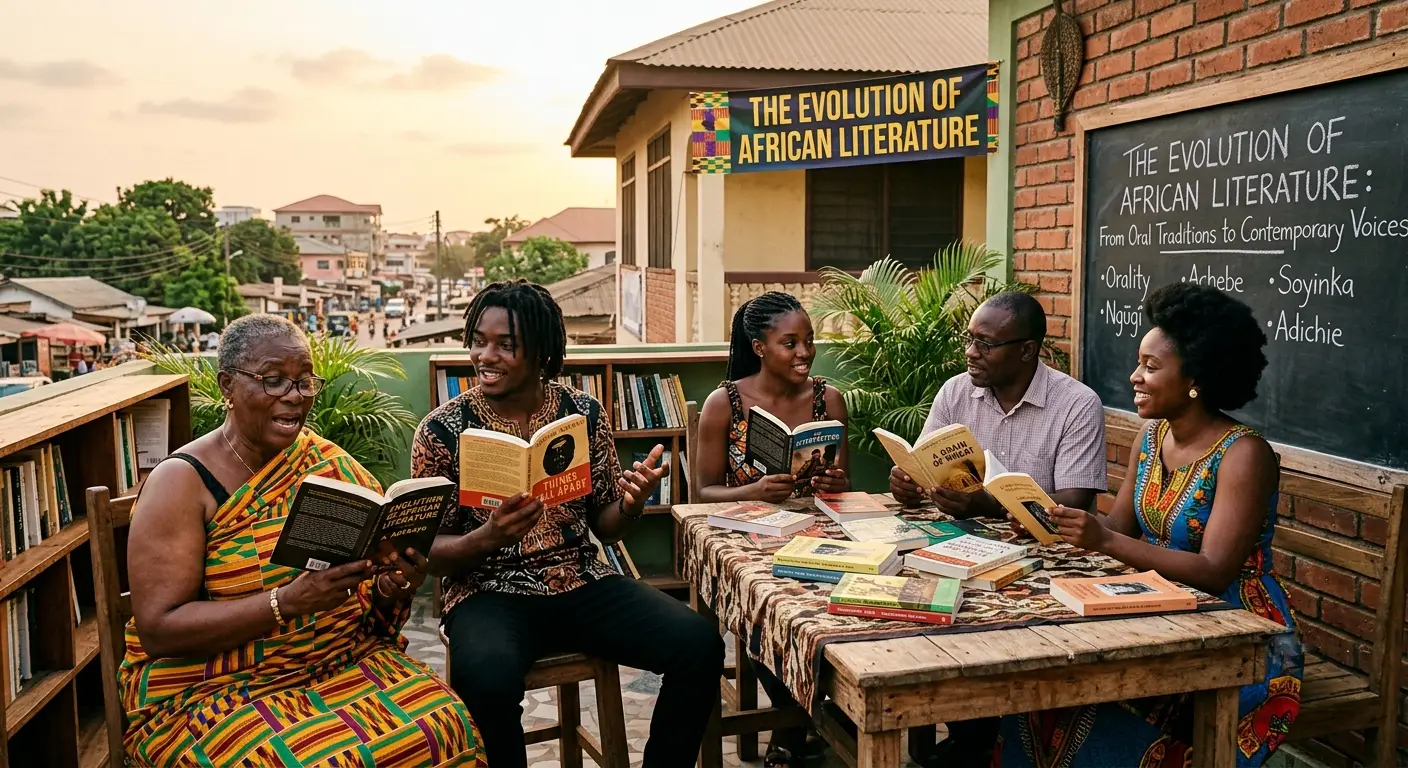
For decades, the global perception of African literature was defined by a specific lens: the “post-colonial” novel. These stories, while brilliant and foundational, focused on the friction between tradition and Western influence. However, the continent’s literary landscape has always been a vast, shifting ocean, and today, it is crashing onto the shores of the world in entirely new ways.
From Oral Tradition to Global Powerhouse
The roots of African storytelling aren’t found in ink, but in the Griot, the oral historians and musicians who preserved the memory of empires. Literature evolved from these spoken epics into a powerful era of political realism in the mid-20th century. Pioneers used the pen to reclaim their identity and speak truth to power.
But in the 21st century, we are witnessing a “speculative explosion.” African writers are no longer just documenting reality; they are reimagining it. By blending ancient mythologies with futuristic concepts and epic fantasy, they have birthed genres like Afrofantasy and Africanfuturism.
The New Epic: Magic and Matriarchy
What makes modern African fantasy so compelling is its refusal to follow the “European” template. Instead of castles and knights, we see:
- Ancestral Legacy:Magic tied to bloodlines and spiritual history.
- Diverse Geographies:Cities inspired by the mud-brick architecture of Timbuktu or the stone walls of Great Zimbabwe.
- Strong Matriarchal Themes:Stories where women aren’t just participants in war, but the architects of empires.
Spotlight: “Blood of the Earth: Yori Saradin”
If you want to see this evolution in action, look no further than the continent of Shonghania in Aaron Grissom’s “Blood of the Earth: Yori Saradin.”
The book opens with a visceral punch: Yori Saradin, the “Warrior Mother” and commander of the Akoben Armies, trapped in a courtyard as catapult stones rain from the sky. This isn’t a story of a hero waiting to be rescued; it’s a story of a tactical leader navigating a world where realms collide and betrayal is as hot as the midday sun.
Grissom captures the grit of African military fantasy perfectly. Through Yori’s eyes—and her grandfather’s heavy broadsword—we experience a world that feels lived-in, dangerous, and culturally rich. It is a must-read for anyone who wants to see how far African literature has come and how bright its speculative future is.